The honest answer: there is no fixed date. Most babies are ready somewhere around 5 to 7 months, some at the earlier edge, some later. The calendar only sets the frame. Whether it is actually time, your baby shows you themselves, through the classic readiness signs:
Only when all the signs line up is your baby truly ready. A 5-month-old who stares longingly at your plate but still pushes everything out with their tongue is not there yet. And that is completely fine. Starting solids is not a race, and a later start has nothing to catch up on, because there is nothing to catch up. If you are unsure whether your baby is ready, bring it up with your pediatrician at the next visit.
Few topics get argued about online as fiercely as purées versus baby led weaning. Yet both approaches are well researched, and both lead to the same place: a kid who eats happily and on their own terms.
The classic purée route usually starts with a vegetable purée at lunchtime and builds from there. You see exactly what goes in, and many parents find that reassuring. Baby led weaning (BLW) lets your baby grab and explore soft pieces themselves from day one. The baby sets pace and portion, and in return more lands on the floor than in the belly at first.
Maybe the most important news: you do not have to pick a side. Most families drift naturally into a mix, purée from a spoon in the morning, a piece of banana in a small fist at lunch. Your baby has no idea which camp they belong to. They only notice whether mealtimes at your table feel relaxed or tense. So choose the route that feels right for your family, and give yourself permission to change it anytime.
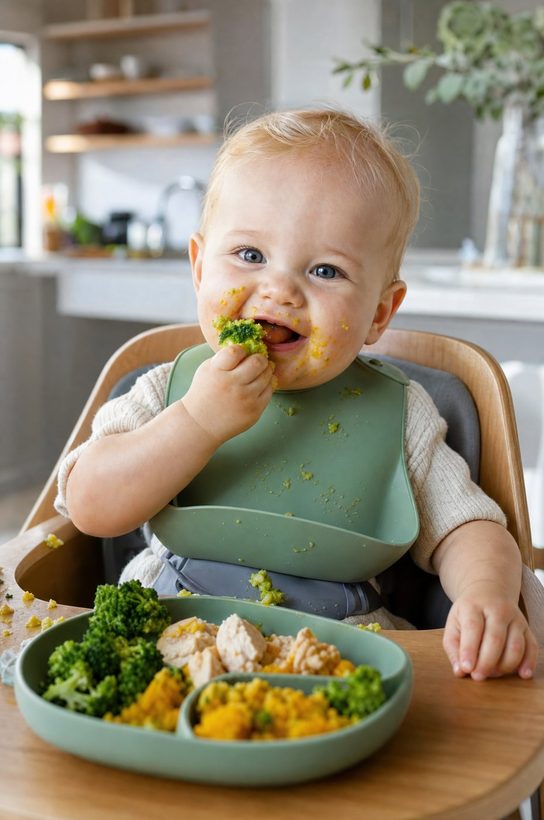
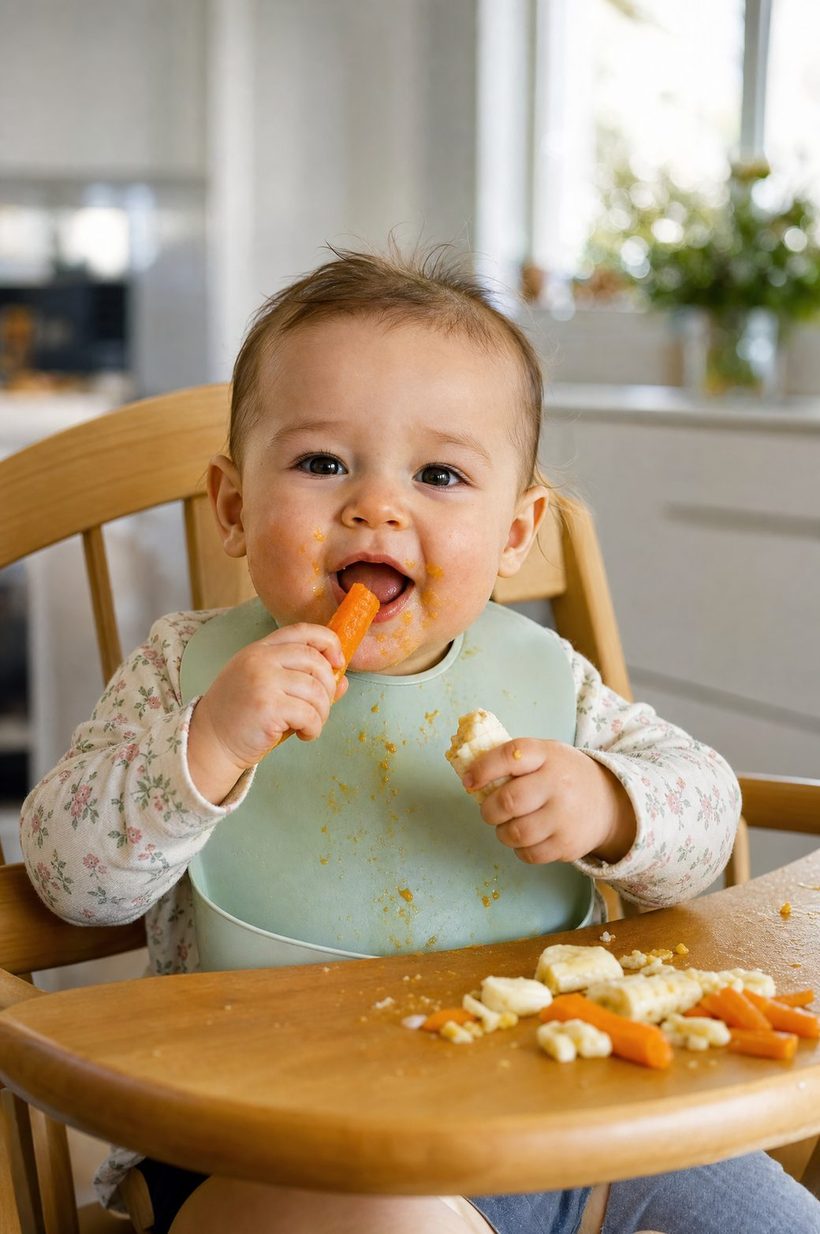
Squishing, smearing, dropping: this is how your baby learns what food is. Every stain on the bib is a small experiment that worked.
Almost every family asks this in the first weeks of solids, and almost always the answer is: yes. Because milk stays your baby's main food source at the start, whether from the breast or the bottle. Those first meals are about discovering, practicing and getting acquainted, not about filling up.
On top of that: babies eat in waves. One day three spoonfuls, one day zero, then suddenly half a bowl. What counts is not the single meal but the picture across the week. If your baby is content, has wet diapers and is developing on track, they are getting what they need. Today's untouched lunch says almost nothing about any of it.
Logging a meal in Darli takes seconds: what it was, how it went, done. No forms, no weighing, no calories, and definitely no app scoring your baby's appetite. Just one quick tap between wiping up and getting back to playing.
Out of those entries grows the picture that actually matters: the week. Instead of fixating on today's empty plate, you see at a glance that across seven days plenty has added up all along. That is the kind of stat that calms an evening down.
Sleep, feeds, diapers: one tap is enough. Darli sorts the rest.
Most babies are ready somewhere around 5 to 7 months. What matters is not the age but the readiness signs: sitting upright with support, the tongue-thrust reflex gone, real interest in food and deliberately bringing things to the mouth. If you are unsure, talk it through with your pediatrician.
Four signs that together show your baby is ready: they sit steadily with a little support, the tongue-thrust reflex has faded, they show genuine interest in your food, and they can grab things and bring them to their mouth. Only once all four are there is it worth starting.
Neither is better; both approaches are well researched and lead to the same outcome. Purées give you more visibility into how much goes in, BLW gives your baby more say. Most families end up mixing the two anyway, and that is completely normal.
In the first months of solids, usually not, because milk remains the main food source. Those early meals are for exploring, not for filling up. The week tells the story, not the single day. If your baby is content and developing well, you are on track; if the worry sticks around, ask your pediatrician.
No, and you should not feel like you have to. Starting solids needs relaxed parents at the table, not bookkeeping. Darli exists to take worries off your plate, not add new ones: a quick tap when you feel like it, and the weekly view shows that plenty has added up. On chaotic days, logging nothing at all is allowed too.
This guide is not a substitute for medical advice. If you are worried about your child, talk to your pediatrician or midwife.