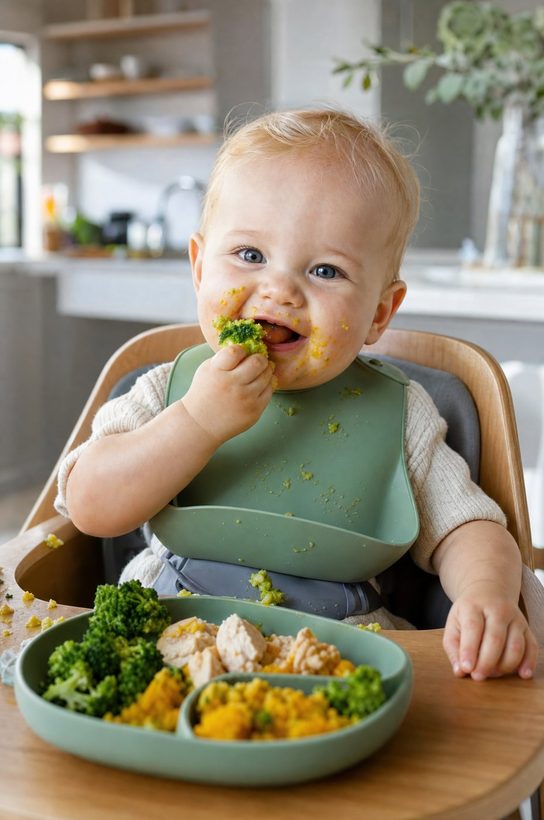
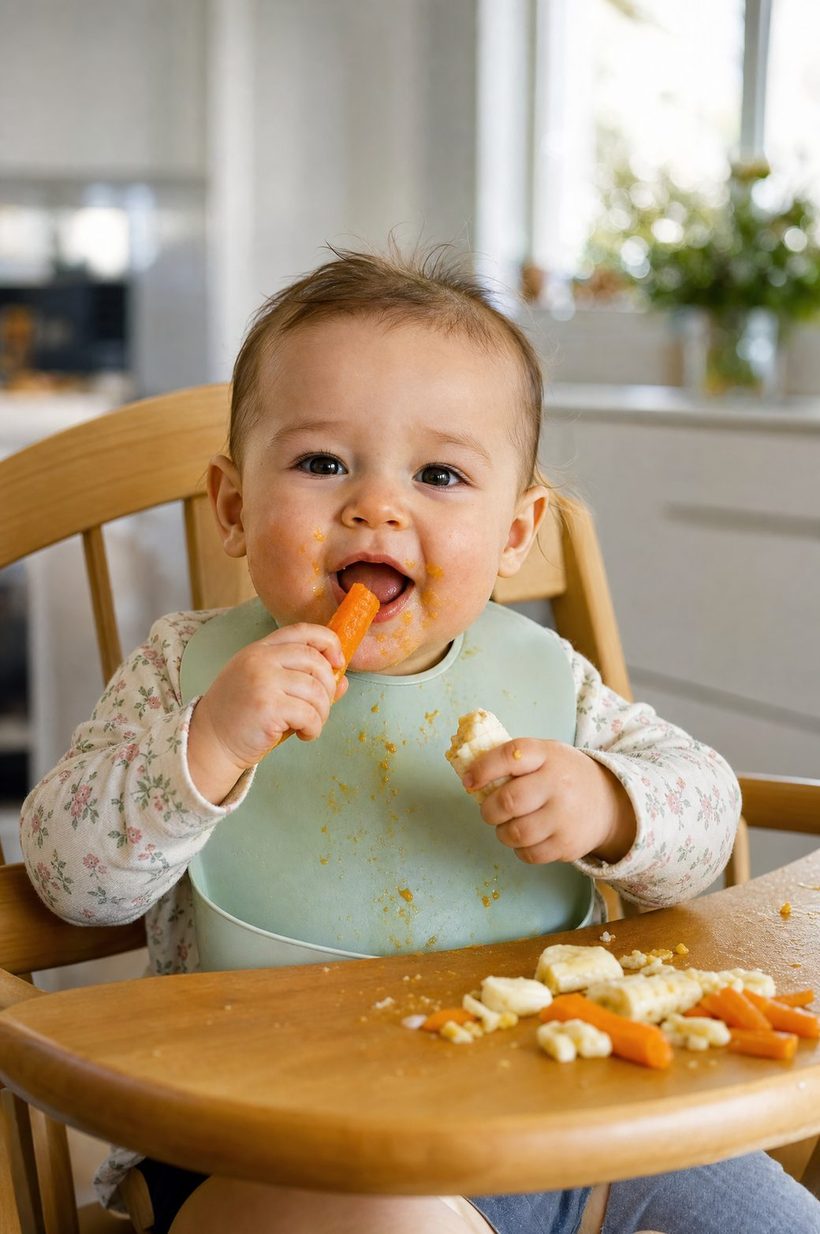
Baby-led weaning, BLW for short, means exactly what it says: the introduction of solid foods is led by the baby. Instead of pureed food from a spoon, your baby gets soft, graspable pieces from the family table right from the start: steamed vegetable sticks, ripe fruit, strips of toast, well-cooked pasta. They pick the food up themselves, bring it to their mouth themselves, and set the pace themselves. Milk remains the main source of nutrition through the early months of solids, whether from breastfeeding or a bottle. Those first meals are about exploring textures and practicing skills, not replacing milk feeds.
The most important thing about starting is not a date on the calendar but your baby's readiness. The signs to look for are: your baby is around 6 months old, and not before. They can sit up unsupported, or nearly so, and hold their head steady the whole meal. They reach for objects deliberately, grab them, and bring them to their mouth. They show real interest in food, watching you eat, opening their mouth, leaning in. And the tongue-thrust reflex, the one that automatically pushes solid food back out of the mouth in the early months, has faded.
It is the whole set of signs together that gives you the green light, not any single one. A 5 month old staring at your fork with burning fascination is curious, but not necessarily ready. If you are unsure whether your baby is there yet, ask your pediatrician at the next checkup. And if your baby was born prematurely or has any developmental or feeding concerns, talk through the start of solids with your pediatrician first as a rule, not an exception.
Few questions get debated as passionately in parent groups. The quiet truth: both approaches are well established, both work, and both end in the same place, a child who simply eats at the family table. Here is the honest side-by-side:
| Baby-led weaning | Purees | |
|---|---|---|
| Start | When the readiness signs are there, usually around 6 months | Possible from around 4 to 6 months, per your pediatrician's guidance |
| Independence | Baby self-feeds from the first meal, practicing grasping and chewing | Parents spoon-feed, independence builds step by step |
| Prep effort | Low: soft-cooked food from the family meal, cut to size | Higher: cooking or buying purees, often separate baby meals |
| Mess | Considerable. The floor, the high chair, and the baby all wear the menu | Manageable, the spoon mostly stays in a parent's hand |
| Portion control | Harder to gauge, your baby decides how much goes in | Easier to see, jars and spoonfuls can be counted |
| Family table | Baby joins family meals from the start, same times, similar food | Separate baby meals at first, the family table comes later |
The best news in that table: you do not have to pick a side. Many families run a combined approach, purees from a spoon at breakfast and soft pieces to self-feed at dinner, or the other way around. Your baby learns to eat either way, and there is no right or wrong here.
What matters more than the method is the mood at the table: shared meals without pressure, a baby who gets a say, and parents who stay relaxed when more of the broccoli lands on the floor than in the belly.
Squishing, smearing, dropping, grabbing again: your baby is getting to know food with every sense at once. What looks like chaos is fine motor practice with a banana finish.
With BLW, new foods stack up fast: broccoli and pear this week, egg and peanut butter the next. The usual advice is to introduce new foods one at a time, a few days apart, so you can tell what caused what if a reaction shows up. That is exactly where Darli comes in: one tap and the new food is logged, with the date and your note on how it went down.
If a rash or an unsettled tummy appears, you see at a glance what was new in the past few days and can bring your pediatrician a clear timeline instead of a guess. For the bigger picture, how starting solids unfolds month by month, and how breastfeeding keeps the leading role while the plate catches up, Darli keeps all of it in one place.
Sleep, feeds, diapers: one tap is enough. Darli sorts the rest.
Baby-led weaning (BLW) is an approach to starting solids where your baby self-feeds soft finger foods from the very first meal instead of being spoon-fed purees. Your baby sets the pace and decides how much to eat, while milk remains the main source of nutrition through the early months. The idea is early independence and a seat at the family table from day one.
Around 6 months at the earliest, and only when your baby shows the readiness signs: sitting up with little or no support, holding their head steady, deliberately reaching for things and bringing them to their mouth, showing clear interest in food, and having lost the tongue-thrust reflex. The full set of signs matters, not the date alone. When in doubt, check in with your pediatrician before you begin.
Soft pieces your baby can hold in a fist with some sticking out, roughly the size and shape of a thick french fry: steamed broccoli florets, soft-cooked carrot or sweet potato sticks, ripe banana or pear, well-cooked pasta, strips of toast without the crust. As a rule of thumb, the food should squish easily between your fingers. Skip honey entirely in the first year, and go easy on salt and added sugar.
The key is knowing the difference between gagging and choking. Gagging is loud: your baby coughs, sputters, and works the piece back forward on their own. That gag reflex is a normal, protective part of learning to eat, even though it can look alarming. Choking is silent: your baby cannot breathe and needs immediate help. Follow the safety rules every time: your baby always eats sitting fully upright, never unsupervised, and hard or round foods like whole nuts, whole grapes, and raw carrot are off the table. An infant first aid course adds real peace of mind, and your pediatrician can answer anything you are unsure about.
Neither is objectively better, and research supports both paths to the same destination: a child who eats at the family table. BLW builds self-feeding skills and chewing practice early, while purees make portions easier to see and keep the mess in check. Many families combine both, and that works beautifully. Relaxed, pressure-free meals matter far more than the method.
In the first months of solids, milk stays the main source of nutrition and solid food is practice and exploration on top. From around 6 months, iron becomes more important, so offer iron-rich foods regularly: soft strips of well-cooked meat, iron-fortified oatmeal, lentil patties, beans, or broccoli. If you are ever unsure whether your baby is eating enough or gaining well, that is a question for your pediatrician at the next checkup.
The simplest way is to introduce new foods one at a time and jot down what was served when and how your baby reacted. In Darli, that is one tap per food, with the date and a note. If a rash or a rough tummy shows up, you can see immediately what was new in the last few days and hand your pediatrician a reliable timeline instead of a memory.
This guide is not a substitute for medical advice. If you are worried about your child, talk to your pediatrician or midwife.