Home · Multiple children
Multiple children

The baby tracker for twins and siblings

One finally falls asleep, the other just woke up, and you're running two schedules in your head at once. That's exactly where you lose the thread. Here's how two kids fit into one view, without you having to think double.
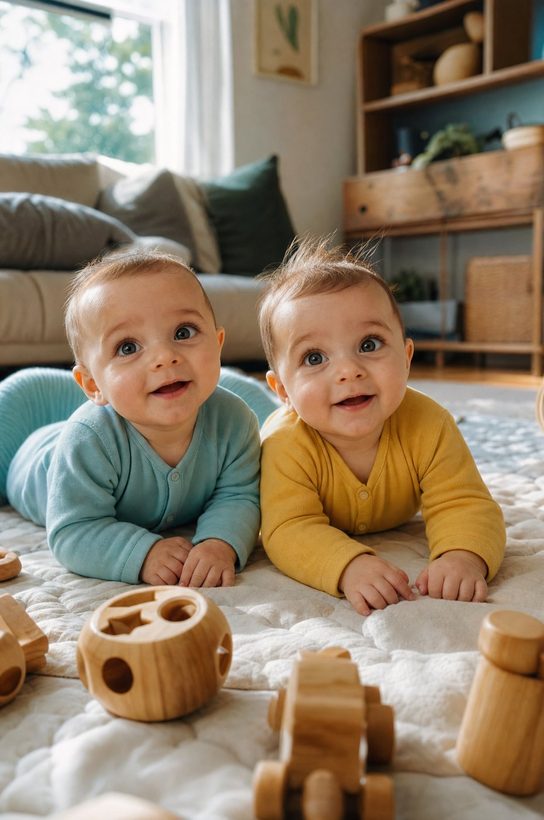
Twins lying side by side on a play mat, looking at each other
Why one view is enough

Twins and siblings: why a shared rhythm is worth gold

Many twin parents tell the same story: from day one, getting the two onto a similar rhythm mattered to them. Not on principle, but as self-preservation. When both sleep, eat, and wake at roughly the same times, little islands appear in the day where you can actually catch your breath. When the rhythms drift completely apart, one of them is always awake, and the day has no pauses left.

Whether you gently nudge the rhythms together or let each child keep their own beat is your call, and both are completely fine. Some twins settle into sync on their own, others stay different, the way siblings simply are different. What helps in both cases is the same thing: seeing both rhythms instead of juggling them in your head. Because if you're mentally tracking two wake windows, two feeding intervals, and two nap times in parallel, you lose the thread twice as fast, and usually right when both kids need something at once.

This isn't just about twins. With an age gap you also have two clocks running: the toddler has appointments, daycare, playgroup, a fixed midday nap. The baby doesn't have a plan yet, just a rhythm that shifts every week. Both belong in one view, or you'll always end up planning one child's afternoon against the other one's sleep:

  • When does the baby's wake window close, and can we still make the daycare run before that?
  • Who ate last, and who's going to ask for food next?
  • Is there a window today when both are happy, for the playground or just for some quiet?

No gut feeling can answer these questions for two kids at once. For that you need one place where both days sit side by side.

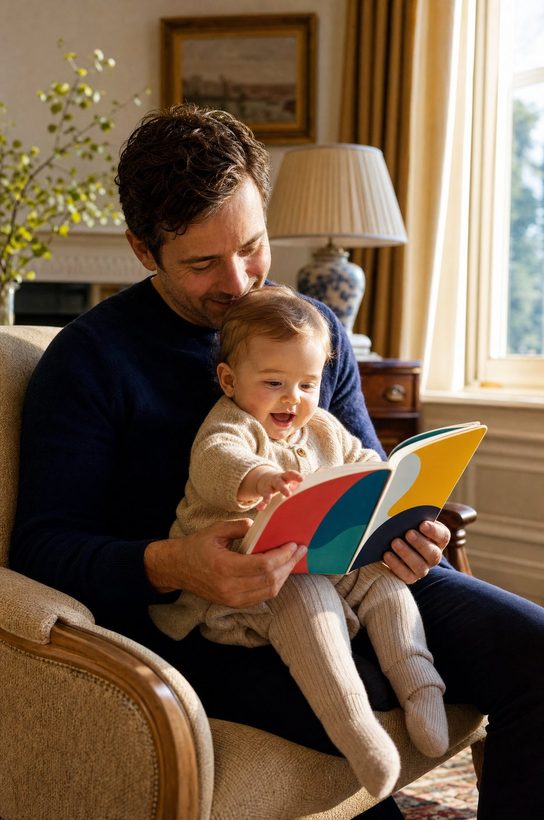
Parent reading to the toddler and the baby together on the sofa

Two rhythms, one calm afternoon.

When you know when both are fed and rested, you can find the gap where moments like this happen. Storytime for three, for example.

How Darli helps

Each child their own profile. Switching: one tap.

In Darli, every child has their own profile with their own day ring and their own prediction. No mixing, no mental conversion: for each child you see what happened today and what's coming next. You switch between kids with a single tap, even at night, even one-handed.

And the two of you stay on the same page. Both parents see both kids, synced between your phones. Whoever has the baby can still see whether the big kid has eaten. Nobody has to ask anymore, nobody has to remember for two.

Darli App Screenshot

More time to laugh.

Sleep, feeds, diapers: one tap is enough. Darli sorts the rest.

Download on theApp Store

Frequently asked

Can I track more than one child in Darli?

Yes. Each child gets their own profile with their own day ring, timeline, and prediction. You switch between kids with one tap, and the entries stay cleanly separated.

Does Darli work as a twin baby tracker?

Especially for twins. Both kids sit side by side as separate profiles, and Darli learns each child's own rhythm. So you can see at a glance whether the two are running in sync or drifting apart, and when the next shared window is coming.

Can both parents see both kids?

Yes. You pair your phones once via QR code, and from then on all entries for all children sync between your devices. Whoever takes the baby overnight still sees the other child's whole day in the morning.

Do twins have to be on the same schedule?

No. Some parents gently align the rhythms because shared nap times make the day easier, others let each child keep their own beat. Both are fine, and Darli works for both paths: it shows each rhythm as it is, without pushing a method.

Isn't tracking two kids twice the work?

More like the opposite. An entry is one tap, for the second child too. What disappears is the constant mental math across two rhythms and the back-and-forth about who did what when. Darli is there to take thinking off your plate, not to add new chores. And on chaotic days, you're allowed to just not log anything.