Home · The Period of PURPLE Crying
Understanding crying

Purple crying: loud, exhausting, and completely normal

Around two weeks old, many healthy babies start crying more, harder, and often for no reason you can find. This phase has a name: the Period of PURPLE Crying. It is a normal part of development, not a sign that something is wrong, and you did not cause it.
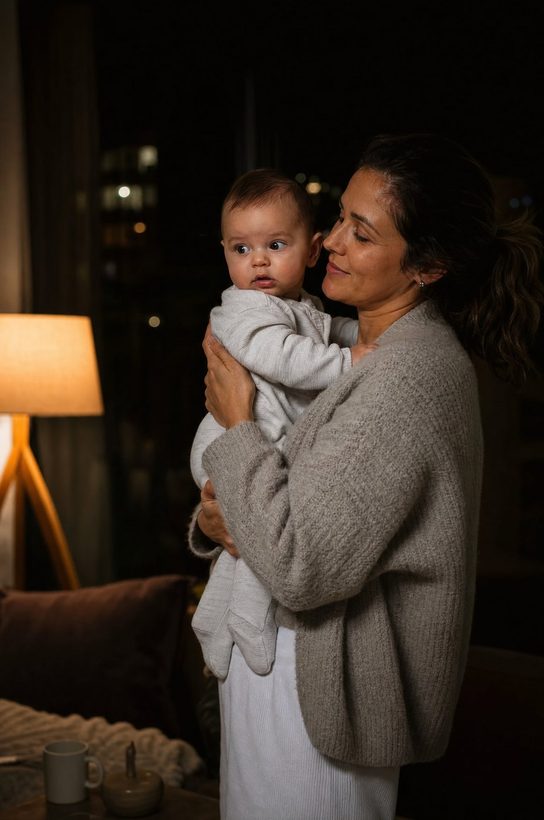
Parent gently holding a crying newborn close against their chest in soft evening light
What's actually happening

A phase of development, not a problem to solve

The Period of PURPLE Crying is the name for a stretch of early infancy when healthy babies cry more than at any other time in their lives. The term was developed by pediatric researcher Dr. Ronald Barr together with the National Center on Shaken Baby Syndrome, and the word choice is deliberate: it is a period, something with a beginning and, more importantly, an end. It typically starts around 2 weeks of age, builds week by week, peaks around 6 to 8 weeks, and gradually eases until it is largely over by 3 to 4 months.

Here is the part that surprises most parents: this increased crying happens in babies who are completely healthy. It shows up across cultures, across parenting styles, and even in other mammals. Some of the crying has no findable cause at all. Your baby is not hungry, not wet, not in pain, not rejecting you. Their nervous system is simply young, the world is enormous, and crying is the one language they have. Researchers who studied these bouts closely found that babies going through them are developing exactly as they should.

Which means the two conclusions exhausted parents reach at 11 p.m., "something is wrong with my baby" and "I am doing something wrong," are both false. A baby can be fed, dry, cuddled, carried, and loved beyond measure and still cry for a long stretch of the evening. That is not a verdict on your parenting. It is a phase of normal infant development, it peaks, and then it fades. If you remember one sentence from this page, make it this one: your baby is healthy, this ends, and it is not your fault.

The acronym

What PURPLE stands for

PURPLE is not about the color of a crying baby's face. Each letter describes one feature of this phase, and together they draw a surprisingly precise picture of what these weeks feel like:

LetterWhat it means
PPeak of crying: it builds week by week and peaks around 2 months, then eases
UUnexpected: crying comes and goes with no apparent reason, fine one minute, wailing the next
RResists soothing: sometimes nothing you try makes the crying stop, no matter how well you do it
PPain-like face: your baby can look like they are in real pain, even when they are not
LLong-lasting: bouts can go on for hours, and several hours a day is within the normal range
EEvening: crying tends to cluster in the late afternoon and evening, right when you are most tired

None of this means soothing is pointless. Babies in this phase often settle, at least for a while, with the classics: hold them close, sway or rock gently, walk around the room or step outside, hum or turn on soft white noise, offer a feed, try skin-to-skin on your chest, or a warm bath. Work through them calmly, one at a time, and give each a few minutes before switching.

And sometimes, this is the R in PURPLE, none of it works. Your baby keeps crying even though you did everything right. That is not failure, and it does not mean you missed the one trick other parents know. A baby who cries in the arms of someone who loves them is still a baby who is held, safe, and not alone. On some evenings, that is the whole job.

Calm baby asleep on a parent's shoulder after a long evening of crying

It peaks. Then it fades.

The crying curve goes up before it comes down, and right now you may be near the top. Every baby who has ever gone through this phase came out the other side. Yours will too, and you are getting through it.

When you feel overwhelmed

It is okay to put your baby down and step away.

There will be moments when the crying gets under your skin. That reaction is human, it happens to calm and loving parents, and there is a safe way through it: put your baby down somewhere safe, like the crib, on their back, and take a break. Step into another room for a few minutes, breathe, drink some water, and come back when you feel steadier. A crying baby lying safely in a crib is okay. Checking on them every few minutes is enough.

One thing is non-negotiable, and it is the reason this phase has a name at all: never shake a baby. Not even for a second, no matter how long the crying has lasted. Shaking can cause serious, lifelong injury. The safe alternative is always the same: down in the crib, a few minutes of distance, then back.

You do not have to carry these weeks alone. Hand your baby to your partner, a friend, or a family member and let someone else take a shift, even a short one. And if you feel you are reaching the end of what you can cope with, say it out loud and get support: call your pediatrician's office or a parent helpline. Asking for help in this phase is not weakness. It is exactly what this phase is designed to teach all of us.

Baby resting safely on their back in a crib while a parent takes a calm moment nearby

More room to breathe.

Sleep, feeds, diapers: one tap is enough. Darli sorts the rest.

Download on theApp Store

Frequently asked

What is the period of purple crying?

It is the name for a normal phase of early infancy when healthy babies cry more, sometimes for hours and often without a findable reason. The term was developed by pediatric researcher Dr. Ronald Barr with the National Center on Shaken Baby Syndrome, and each letter of PURPLE describes one feature of the phase: Peak, Unexpected, Resists soothing, Pain-like face, Long-lasting, Evening. The word Period is the point: it has an end.

When does purple crying start and end?

It typically begins around 2 weeks of age, builds gradually, and peaks around 6 to 8 weeks, roughly the 2 month mark. After the peak it eases steadily and is largely over by 3 to 4 months, in some babies a little later. The ages are ballpark figures and vary from child to child.

Is purple crying normal?

Yes. Increased crying in these weeks shows up in healthy babies across cultures and parenting styles, and some of it has no identifiable cause at all. It is considered a normal part of infant development, not a sign of illness or of anything you are doing wrong. If you are unsure whether your baby's crying is within the normal range, your pediatrician can help you sort it out.

How do I soothe a baby during purple crying?

Work through the classics calmly, one at a time: hold your baby close, sway or rock, walk around or step outside, use soft white noise or humming, offer a feed, try skin-to-skin contact or a warm bath. Give each idea a few minutes before switching. And know that sometimes nothing works, which is one of the defining features of this phase, not a sign that you failed.

What should I do if I feel overwhelmed by the crying?

Put your baby down somewhere safe, like the crib, on their back, and step away for a few minutes to breathe. A crying baby lying safely in a crib is okay, and checking in every few minutes is enough. Never shake a baby, no matter how long the crying has lasted. Ask a partner, friend, or family member to take over, and if you feel you cannot cope, call your pediatrician's office or a parent helpline.

How is purple crying different from colic?

Colic is a label often given to babies at the intense end of the same crying curve, classically defined as crying more than three hours a day, more than three days a week. The Period of PURPLE Crying reframes the picture: increased crying in these weeks is something all babies go through to some degree, and even a lot of crying can be normal in an otherwise healthy baby. If you are worried, or your gut says something is off, have your pediatrician take a look.

When should I call the doctor?

Call your pediatrician if your baby has a fever, is feeding poorly, is unusually sleepy or hard to wake, is vomiting repeatedly, is not gaining weight, or if the cry itself suddenly sounds different, for example unusually high-pitched or weak. And beyond any checklist: if you are worried, call. Ruling things out is exactly what your pediatrician is there for, and no one will mind that you asked.

This guide is not a substitute for medical advice. If you are worried about your child, talk to your pediatrician or midwife.